If you read that last paragraph carefully you would have noticed the holiday was only on Tuesday, but it was a long weekend. This is because almost this entire country took a 'bridge' day on Monday and made a true long weekend out of it. At least three quarters of the people I spoke to did the same. Following suit (some Italian habits are rubbing off on me a little) I did the same and had four days to run off on another adventure. Most of my ramblings around Italy have been to the South, so this time I decided to head North. My decision was also swayed when I read that there is a Palio (horse race, more details to follow) in Ferrara the last Sunday in May every year.
I told a friend of mine, Crystal, about my plans to head out of town for the weekend and about the Palio and she happily agreed to join, as she had not been to Ferrara and is leaving Italy soon and trying to cram in some last minute traveling. I was working until 8 on Friday night so unfortunately we could not leave until the next morning. We got to the train station and the Eurostar fast trains were are booked (note to self, book trains in advance on holidays) so we got stuck on the considerably slower inter-city train. We arrived in Ferrara around 3:30 Saturday afternoon instead of 1:00 as originally planned. Not the best start, but we were both happy to be away from work with nothing to worry about for four days so we took it in stride.
We walked in from the train station to our hotel which was conveniently located one street away from the Este family castle that dominates the center of the town. Our hotel was called the Hotel De Prati and for 105 euros on the night of the Palio was very nice and the man working at the front desk on Saturday afternoon was exceptionally friendly and helpful. We dropped our bags at the hotel and headed out immediately to stretch our legs after five hours on the train. We grabbed a map from the front desk and were off.
Our first stop was the castle. The castle was built in response to a riot against the royal family that ended when a high official in the royal court was torn to pieces by a mob that they could not keep out of the original palace. Originally part of the city walls, the castle is based around four towers that are joined with curtain walls. Over time the city expanded and the castle was used less for defensive purposes and apartments were built for the Este family. The exterior has remained more or less unchanged since its completion in 1544 while the interior has undergone many alternations as tastes and styles changed across the centuries.
Three features of the castle struck me the most. The first is the massive moat that still encircles the castle making access possible only across drawbridges that appear to be all original. Second, the kitchen, where the civil and military aspects of the castle vividly overlap. Re-constructed ovens with slits for archers next to them. And finally the prisons. The walls and ceilings are covered with scratchings and ashen writings of those held there. The prisons were used from as early as the 1420's when the Duke's second wife fell in love with her step-son and started an affair with him, they were kept in separate cells for a few weeks and finally beheaded. The most recent residents were followers in Garibaldi's during the battles for the unification of Italy in the 1840's and 50's. Some of their writings are still easily seen, including one for a man named Marco who wrote about his woeful situation as someone who was fighting for freedom and has had all freedoms taken from him.
The castle is impressive, but I was not a fan of the restorations in many of the rooms, there is too much new white plaster and places that have obviously been whitewashed over. This may help with the presentation of what still remains, but to me drains much of the original feeling out of the castle.
After the castle we wondered around town, looking at the map only very occasionally, with no particular destination in mind. At one point we ended up on the outskirts of town walking around the city walls where we first discovered a small tower that had a photography exhibition of a local ornithologist and his pieces of the nearby bird sanctuary. From there we took a turn back toward the center of town and happened across a small bio-farm where they grew organic vegetables and made various things from them, ranging from homemade pastas to incredibly thick honey. We settled for a bag of cherries to accompany us on your walk back to the hotel and to tide us over until dinner.
We got back to the hotel as asked the guy at the desk for a dinner recommendation, something I am always a little hesitant to do as I think all Italians are generally trying to screw over tourists and will more likely send you to their friends' places than a truly good restaurant, although sometimes the two go hand in hand. In this case we lucked out and he ran off a list of four or five places and what they're specialties were. We chose the most authentic sounding one, although it was a bit farther from the hotel than the others. On our way over was walked past the Duomo, San Giorgio di Ferrara, which was illuminated with shimmering candles whose light danced on the soft pink and white marble facade.

We ate dinner at Il Ristorantino di Colomba and had an absolutely amazing meal. We stared by splitting smoked goose breast, which Crystal almost refused to order, but after one bite we both agreed it was up there with the best smoked meat either of us had ever had. It was garnished with shredded red cabbage, shredded lettuce and grapefruit. For a main course we split two pastas. One was the house spaghetti, the recipe which I posted this afternoon, which was delicious and I managed to recreate last night. The other was a cappelletti, a type of stuffed pasta, in a simple but savory ragu sauce. To wash it all down we had a liter of the house red, a Sangiovese del Rubicone, was easily better than its 6 euro price.
Sunday was the day of the Palio (explanation coming soon) but it did not start until 4pm so we decided to rent bikes as a way to see a little more of the city. Ferrara is a city that has more bicycles than cars and everyone, I mean everyone, from 1 to 92. While walking do dinner we saw a girl in her twenties in red stilettos cycling by just slow enough not to mess her hair up, but still with purpose. In the morning there was more than one mother with a baby seat (think car seat but a little smaller) either just behind the handle bars or on the rack over the back tire. Baskets full of daily groceries were everywhere.
We found a bike rental near the Duomo and picked up our bikes for the day, Crystal opted for one a little newer, I decided to go old school and was rather enamored with my little three speed bike that was probably twice as old as I am, but worked like a dream. It was the first bike I have ridden a long time, possibly the only one without training wheels, where you could start to pedal backwards to brake.

We spent the morning and early afternoon cruising around the city with no real destination in mind. Crystal discovered she could finally ride a bike with no hands, we crossed the river Po and saw a gaggle of ducklings, I refused to look at the map, all in all good times.
When we were in the center of town, as opposed to riding along the tops of the walls, which we did quite a bit, we started to see more and more people amassing near the castle wearing all kinds of medieval costumes. It was the initial preparations for the Palio. A Palio is a traditional medieval horse race between the various contrade (districts) of a city that is held once or twice a year. The most famous is in Siena where it takes place in the main square, piazza del Campo, every year on July 2nd. If you've seen the most recent James Bond movie, Quantum of Solace, the opening scene when he is running through a crowded piazza with a horse race going on is the Palio of Siena.
Siena's is the most famous largest Palio out there, but cities, and smaller town all across Italy hold their own. Ferrara's Palio is the oldest in Italy. This year they celebrated their 750th anniversary, meaning this event has been held since before the birth of Dante, before America was even a thought, and a few years after Genghis Khan ravaged Asia.
The event itself started at 4:00 with a massive procession through town starting at the castle and finishing in the Piazza Ariostea. Each of the eight contrada was led by three men bearing the standard of the district. They were in turn followed by people in every sort of medieval dress, all wearing the colors of their contrada: swordsman, archers, ladies in waiting, regal couples, princes, princesses, flag throwers, trumpeters, drummers etc etc.

Standard bearer of the Contrada di Borgo San Giacomo
Once all eight contrade had processed into to piazza the races began. First was the 16 and under boys footrace. They all wore the small costumes they walked in the parade it, but had switched into running shoes, which mildly disappointed me, all or nothing right? They were followed the by the girls 16 and under footrace, again, still in costume with sneakers.
The spectators around each end of the piazza, as opposed to the long sides, where divided up by contrada and when each race finished the contrada that one stormed the track and raised the victorious runner on a pair of shoulders (looked quite uncomfortable actually) and carried him/her on a victory lap.
After the two footraces came the animal races, first a donkey race and then a proper horse race. the donkey race was one of the funniest things I have ever seen. I have little experience dealing with donkey's but can imagine that they are not the most intelligent animals and could be a bit ornery. My speculation were confirmed as they tried to line them all up and get them to the starting rope (no gates, just a taught rope that is dropped). This process took about twenty minutes and finally the judges gave up and just started the race when about 6 of the 8 were ready.

Getting read for the donkey race, rider from Contrada di Borgo San Luca
After the donkey race came the real horse race. Lining up the horses took one false start and almost an hour of jostling to get the order right. Without gates this was a very difficult task. All the riders were also bareback (donkeys were the same). They also refused to start the race until the order was just right, obviously the horse race is taken a little more seriously than the donkey race, rightfully so.
Overall a Palio is certainly a sight to see, I have yet to see the one in Siena and imagine it is incredibly, but I think seeing the one in Ferrara was in a way more authentic. The city was not particularly crowded, not many people come to Ferrara to see the Palio. In fact, most of the Italians I talked to before leaving did not even know it existed. It felt very much like a county fair. People of every age were out to root for their district, the hard core fans wearing their local colors, others with a small towel to wave.
After the Palio we took a train from Ferrara little farther north to Padua where we arrived at our hotel around 9 that night. Padova is the second oldest university town in Italy, a few years behind Bologna, so there is a pretty active night life with lots of small wine bars and decent restaurants. We wandered from the hotel, found a place for a pizza and called it a night.
The thing most people come to see in Padua is the Scrovegni Chapel (or Arena Chapel) with Giotto's amazing frescoes depicted the life of Christ with a focus on the life of the Virgin. Giotto is viewed by many having ushered in the early Renaissance with his fresco work. He portrayed emotion in his figures in a way never seen before. He did this primarily through gestures, which he used as a vehicle of inward emotion. From a practical stand point the chapel is a little inconvenient, they allow groups of 25 people in for 15 minutes at a time an you must reserve a spot in advance. They recommend doing so a day or to before (you can't reserve on the phone the day of), but we arrived at the ticket office around 10am and there were plenty of spots open during the day. We chose one around 4pm as the chapel is near the train station and that was going to be our last stop in Padua.
Aside from the Arena Chapel the only other two things of interest I wanted to see in Padua were the market designed by Palladio and Donatello's Gattamelata equestrian statue. The Gattamelata stands to the side of the church of St. Anthony's in piazza del Santo. The statue represents Erasmo da Narni, the commander of the Venetian army whose nickname was Gattamelata, which means 'honeyed-cat', because was a smooth talking diplomat. In taking on an equestrian statue of this nature Donatello was doing something that had not been done since ancient times. Year before, Donatello, along with Brunelleschi, traveled to Rome to study ancient works, Donatello sculpture and Brunelleschi architecture. His Gattamelata was largely inspired by the statue of Marcus Aurelius in Rome, now in the Capitoline museum, but in his time in front of St. Giovanni in Laterano. The two are very similar, but there are some important differences.
One of the greatest problems an artist faces when constructing an equestrian statue in bronze is supporting all the weight on the main sculpture above on the skinny legs of a horse. The Romans were able to accomplish this with only three legs, Donatello, however could not, and was forced to have the horses front left leg supported by a ball, Aurelius' horse's front right leg is in the air. (Leonardo was commissioned by the Medici's to build an equestrian statue and he tried to do so with the horse rearing up on its hind legs, putting all the weight on two skinny pieces of bronze, however he only completed a wood model.) Both Erasmo and Aurelius have their right hand raised, Aurelius in a Roman gesture of clemency, Erasmo's holding a lance. Both statues are almost exactly the same height, about 11.5 feet, but Donatello's Erasmo is considerably smaller than the Roman Aurelius. The smaller figure actually give him a greater sense of power. This sounds backwards at first, but because the man is smaller and is controlling a beast of the same size he seems even more powerful.

Donatello's Gattamelata outside St. Anthony's in Padua.
The church in the background is impressive and I confess I knew almost nothing about it before going in. The church is laid out like a pilgrimage church that allows for pilgrims to enter and not disturb a service going on in the central nave. This is done through aisles along the sides of the nave and an ambulatory and circles the main altar. This design would allow pilgrims to reach the relics the church contained at any time of day, whether or not there was a service in progress. The theory behind this is that the closer a pilgrim was to a relic the more likely his prayers were to be heard (I really don't understand religion sometime). The church of St. Anthony's contains a trove of relics in a radiating chapel directly behind the main altar. The relics of greatest interest are those of St. Anthony himself, his tongue, larynx and chin are all in glass cases. They were put there in 1980 when his tomb was opened to celebrate some anniversary and those parts had somehow been preserved (again, don't get it). Crystal did make the comment that she felt a particular energy, not at the relics but the tomb on Anthony itself.
After St. Anthony's we headed to the market in piazza della Ragione to pick up somethings for lunch. Crystal and I split up, I was in charge of things to make sandwiches and she was going to get some fruit. I found a butcher that was selling smoked goose, which I of course got (and have been trying to find unsuccessfully in Rome), a piece of a very nice goat cheese and some pane del santo (saint's bread) that had whole sun flower seeds in it. I thought I did a reasonably good job and didn't get more food than we could handle, Crystal went another direction.
When we met she had a large plastic bag with melon and two smaller brown paper bags in it, remember were just looking for lunch. One paper bag contained 4 peaches and 2 nectarines, the other a half kilo of cherries. And then there was the melon. The fruit vendor had given her a taste and she had to get it. I was skeptical at the time, but it ended up working out very well. We ate the melon the next more for breakfast in our hotel, cutting it up with my small swiss army knife and drawing a few strange looks. As good as the melon was, the peaches took first prize. They were unbelievable. So juicy. A really red juice that almost looked like blood it was so red, I couldn't resist and had to take a picture...

...might have been the best peach (well three) I've ever had.
Earlier in the morning we passed a beer store and we picked up two bottles to have with lunch, however they were not cold so we put them in the fountain to cool for a few minutes before we had lunch. Before we started to eat, while waiting for the beer to cool, we discussed the quickest way to cool a bottle of something. Crystal, being a biology teacher, went immediately to dry ice, but agreed with me when I said the best way to go (outside of a lab) is to fill an ice bucket about half way with ice, and then a lot of water and a ton of salt. Stir it up and you get water that is below freezing because salt water has a lower freezing point than fresh water. Cool a bottle of wine in about 10 minutes, much quicker than the freezer. After the beer cooled it went perfectly with the smoked goose and goat cheese sandwich I put together.
After lunch we tried to get into the University where Galileo taught and the first anatomy theater was, but it was closed for no clear reason despite the sign saying there were tours every hour, 't-i-i' as Crystal said, This Is Italy. From there we walked back to the Arena Chapel to see Giotto's frescoes, grabbed our bags and headed to the train station.
Our plan was to take the train to Vicenza, about 20 minutes away, where Palladio spent his formative years and then designed much of the city. However the thing I wanted to see most, his Villa Rotonda, is only open from 10-12 and 3-6 on Wednesdays, we were going to be there on Tuesday. So I'll have to try that some other time. Out of plans we decided to take the first train coming through to anywhere we had heard of and neither of us had been to yet. We ended up going to Mantua. Somewhere I was very excited about but did not think I would get to anytime soon, as it is a little inconvienent.
We got in around 7 and already had found a hotel after flipping through our various guide books. We dropped out stuff off and went out to ejnoy the last hour or so of light. Mantua used to be an island (now it is just a penninsula) but it still sits between three small lakes, very originally named, Higher Lake, Middle Lake and Lower Lake. After walking about town a bit and making our way through the Ducale Palace, once the largest in Italy, none of the rooms were open but the modern day city streets wind through the Palace, we found ourselves on the edge of Middle Lake and happened upon a lakeside bar called Papa's and stopped for a drink.

Crystal enjoying a drink by the lake in Mantua at sunset.
The main church in Mantua is Sant'Andrea designed by Leon Battista Alberti in the latter half of the 15th century. The church is rare in that Alberti was given the commission from the ground up, there was nothing there he had to work around that would interfere with his designs. Alberti, a diligent student of Vitruvius, based much of his design off Roman, and even earlier Etruscan ideas. He was presented with one thing in particular he had to achieve with the design. The city of Mantua has a vial of blood that is supposedly the blood Christ shed on the cross and is displayed once a year. To accomadate the crowds for this event the clergy needed to be able to present the vial to those inside the church as well as out, again the closer people were to the relic the more likely their prayers would be answered. To do this Alberti's facade is a triumphal arch with a low pediment over it, and then another open arch above that with a large rose window where a clergyman could stand holding the vial and present it to the crowd on either side of him.
The interior of the church (the crossing, dome and choir were added later) mixes the triumphal arch motif with an early Etruscan idea for the interior of a temple. Each side of the nave has three massive chapels, mimicking the three cellae that would have been in an Etruscan temple, as described by Vitruvius. Above the nave is a giant coffered barrel vault. The effect inside the church, looking only at Alberti's end and ignoring the near section, as I have tried to capture in the picture, is one that reminds me of the chiaroscuro (contrasting light and dark) that later Renaissance painters strove for. There were only 7 windows in Alberti's original design (not counting the small apse which has been destroyed) and all are very high above the church floor so they each seem to have a beam of light illuminating a certian point in the church, which changes as the day goes on. This leaves very uneven light throughout the building, leave dark corners in opposition to brilliantly illuminated patches.

Interior of Alberti's Sant'Andrea in Mantua
Our last stop in Mantua was Giulio Romano's pleasure palace built for the Gonzaga family, the Palazzo Te. The palace was built at the beginning of the Mannerist period, 1520's and 30's, just following the high Renaissance. This was a period of turmoil in the church, on Haloween in 1517 Martin Luther published his 95 Theses setting off the Protestant Reformation and generally setting the Vatican on the defensive, and just 10 years later Rome was sacked by invading German and French armies who ravaged the city for nearly a year. Art at this time was largely done toward the glory of God, and since things were not going well for Catholics, God must have been angry with what they were doing, so the artistic style began to change. The High Renaissance achieved ideals of ancient proportions, Leonardo's Vitruvian Man being perhaps one of the most famous and obvious examples. The figures of Michelangelo in the Sistine Chapel were also based in antiquity and reflect largely Greek sculpture, the Belevedere Torso in particular. Raphael's School of Athens brought together all the great minds from antiquity onto one wall. Another explanation for the artistic shift, or possibly just one that added to it, was that artists simply could not execute works to the same levels as the three masters of the period I have listed above, and after their deaths, Leonardo in 1519, Raphael in 1520 (Michelangelo didn't die until 1564 but his style too changed over time) other artists had to try other things.
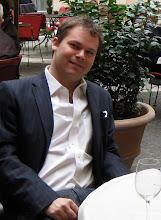
The Palazzo Te reflects more of the former idea. Giulio Romano was a very skilled architect and had clearly studied his Vitruvius. He also lived and worked in Mantua, a city splattered with Alberti's Early Renaissance works. His palace includes many ancient prinicples and architectural techniques but acknowledges them by playing with them. For example a pediment above a window (the triangle part) with a gap at the top, leaving the triangle without one of it's three points. Another thing he does often is put incredibly enlarged keystones, as you see in the door behind me in the picture below.

Strolling in the courtyard of Giulio Romano's Palazzo Te in Mantua
Inside the palace the rooms are decorated with incredibly lavishly, Romano having designed everything done to the last fireplace. The two rooms of particular note, and which I felt were particularlly Manneristic, were the room of the Giants and the room of Psyche. The room of Psyche depicts a Ducale lunch where if you look at the details are sorts of debauchery is going on: naked bodies everywhere, drunks, a man having sex with a goat, and the list goes on. The Room of the Giants depicts the fall of the giants at the hands of the Olympic gods. Starting from a false dome directly overheard and painting pours down from the triumphant gods above to the larger than life grotesque giants at floor level being crushed beneath massive columns and boulders hurled down by the gods along with an occaisonal lightning bolt from Zeus.


3 comments:
My enjoyment of this was spoiled by the large number of errors, mainly simply the wrong word at the wrong moment, and wonder why it wasn't read through by you and/or someone else before posting?
I'm glad you spent a great time there. Wonderful choice!
Nice photo reportage! You visited some great places, congrats! What's your next destination?
Post a Comment